AI-supported inspections for SGS Studentbostäder
Reducing operational friction while creating a more transparent move-out experience
Product Design
UX
Research
AI
Service Design
Web

Städkollen is an AI-supported inspection platform that transforms how student housing move-outs are managed. It replaces manual, inconsistent cleaning inspections with a structured workflow that improves transparency for tenants and operational efficiency for property managers.
I led the end-to-end UX and Product design — including research, service design, interaction design, and system structure. The result is a scalable service used in high-volume housing turnover contexts, improving transparency for tenants and efficiency for inspection staff.

Client | SGS Studentbostäder |
Industry | Property Tech / AI-supported operations |
Timeline | 2024 - 2026 |
My Role | UX & Product Lead |
Team | UX Lead, Visual Designer, Developers, Business Designer. |
Impact
Within the first year of implementation, Städkollen contributed to measurable improvements in both operational efficiency and tenant experience at SGS Studentbostäder. These outcomes show how a more structured inspection system can improve transparency, reduce uncertainty, and support more consistent operational decision-making.

+32% Customer satisfaction increase - improved overall tenant experience
17% → 96% Inspection visibility & control - significantly increased transparency
Near-zero tenant conflicts during move-out - reduced friction and uncertainty
Context
SGS Studentbostäder manages large-scale tenant move-outs where apartments need to be inspected quickly and consistently between occupancy cycles. These periods are operationally demanding and involve multiple stakeholders: tenants, inspection staff, technicians, and property managers.
Key challenges included
— Inconsistent evaluation between inspectors
— High workload during peak turnover periods
— Unclear expectations for tenants regarding cleaning standards
— Frustration from new tenants when previous cleaning was insufficient
— Limited data to support operational decision-making
How might we design a structured and scalable inspection system that improves consistency, reduces operational load, and increases transparency for tenants during move-out cleaning?
Understanding the operational ecosystem
The research showed that the main challenge was not only the inspection itself, but how to translate messy real-world inputs — photos, tenant actions, incomplete documentation, and subjective judgement — into consistent and actionable operational decisions. This made the flow between tenants, AI analysis, and inspection staff the core design space that was explored.
Research included
— Interviews with tenants and property managers / workers
— On-site observation of inspection workflows and systems
— Stakeholder workshops with SGS Studentbostäder
— Ongoing collaboration with engineers exploring AI feasibility
Key insights
Research showed that the inspection process was difficult not only because of cleaning standards, but because expectations, documentation, and decision-making varied across the journey.
Students needed clearer guidance, while property managers relied heavily on individual judgement. During peak move-out periods, inconsistent photo documentation and high workload made the need for a more structured system clear.
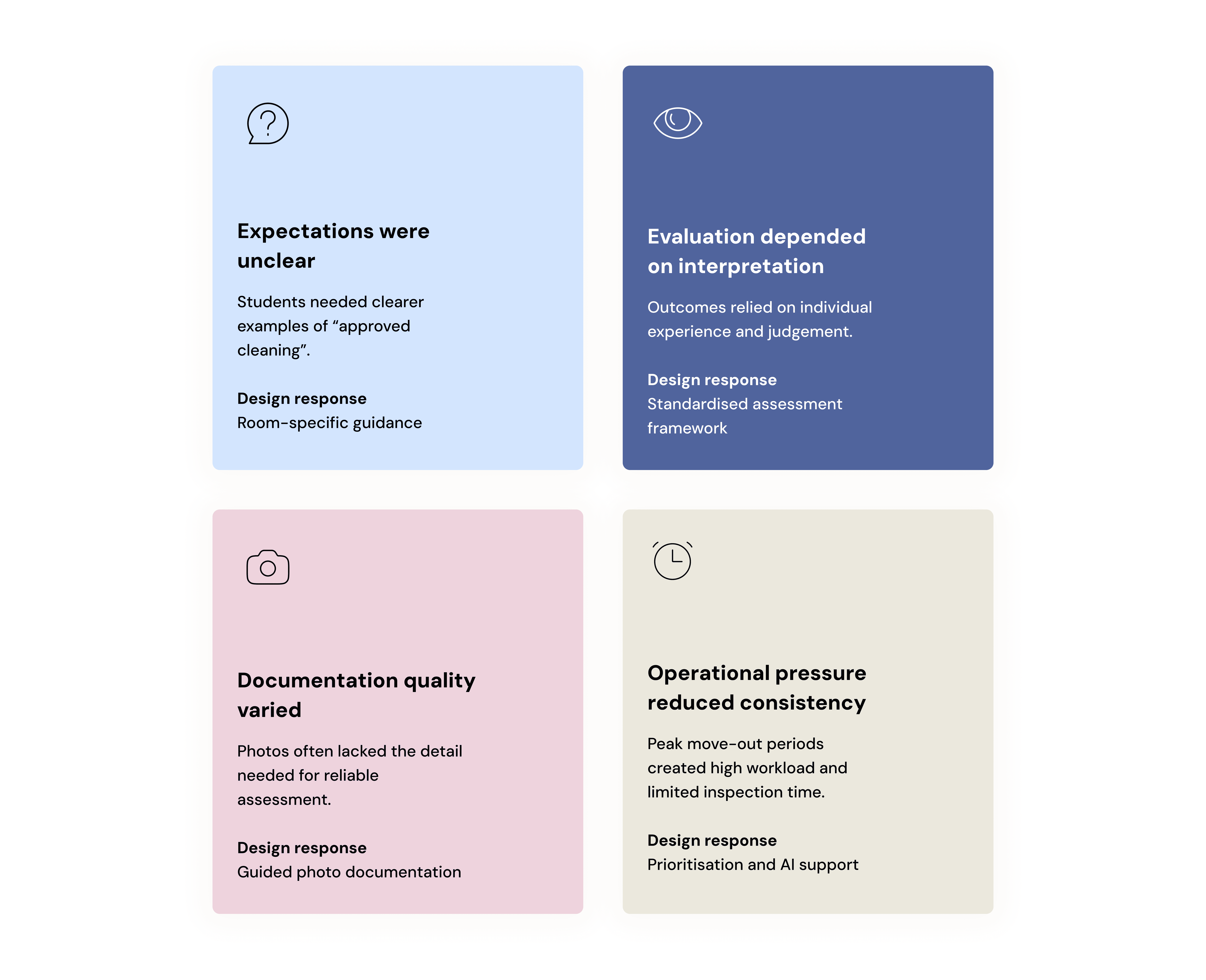
These insights became the foundation for the product structure — connecting tenant guidance, AI-supported assessment, and operational decision-making into one shared system.
From insights to system design
These insights became the foundation for the product structure — connecting tenant guidance, AI-supported assessment, and operational decision-making into one shared workflow. Städkollen was designed across three layers. Together, these layers helped turn inconsistent real-world inputs into a more structured inspection process.
Tenant layer
Guidance, room-specific checklists, photo documentation, and feedback.
AI layer
Image analysis, scoring, issue detection, and structured signals.
Operational layer
Dashboard overview, flagged cases, prioritisation, staff review, and follow-up.
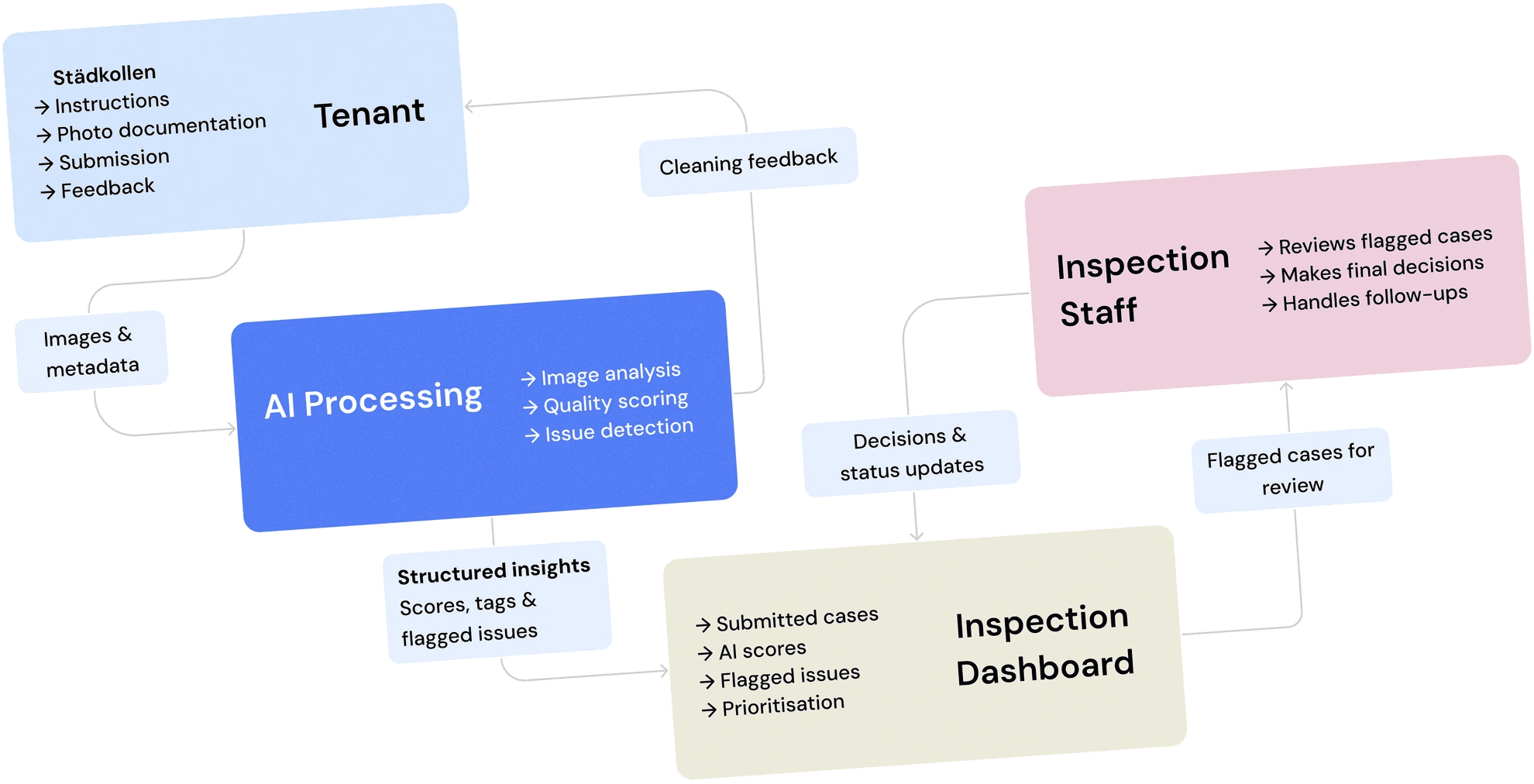
Designing AI as decision support
AI was designed as a supporting layer, not a replacement for human judgement. The goal was to improve consistency and prioritisation while keeping inspection staff in control of final decisions. This meant designing for transparency, reviewability, and clear boundaries around what AI could and could not decide. The core principle is:
AI acts as infrastructure for trust, consistency, and operational clarity - not automation of authority.
Key principles
Human-in-the-loop
AI supports evaluation, but staff make the final decision.
Transparent outputs
Scores, flagged issues, and feedback are reviewable.
Guidance over automation
Feedback helps tenants understand what needs attention without making the system feel like an automated judge.
Selected product experiences
The final product combines a structured tenant flow with an internal operational dashboard
I led the UX foundation, service design, flows, interaction logic and system structure. Final UI refinement was done in collaboration with a visual designer.
Tenant preparation
A guided flow helps tenants understand what needs to be cleaned and documented before move-out. To move quickly, the first version was built in Tally, allowing SGS to manage content independently while validating the flow before moving toward a fully customised Nestic experience. I also used custom CSS to improve the visual fit and bring the flow closer to the SGS brand.
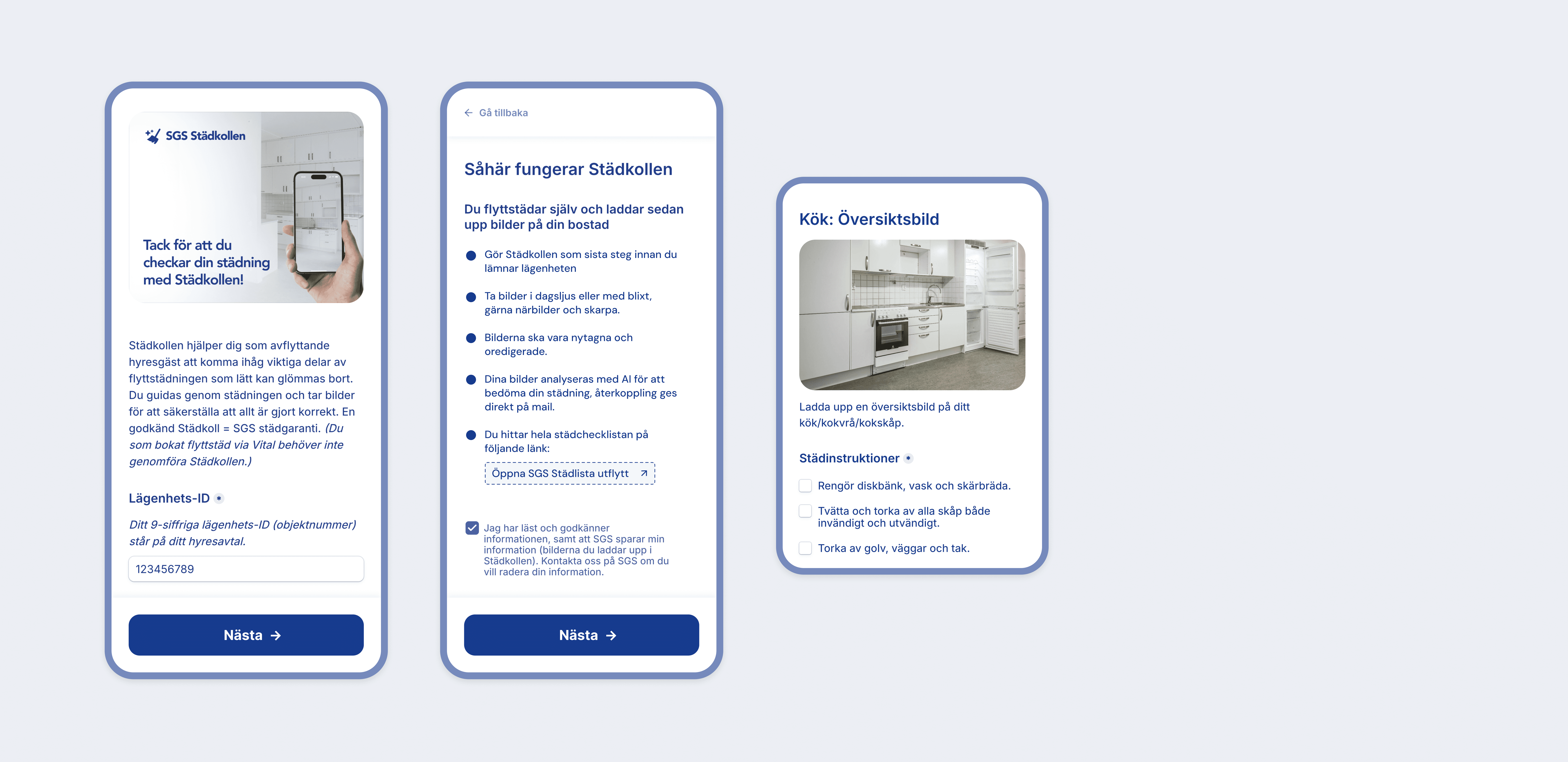
Photo documentation
Room-specific photo capture helped tenants submit more consistent material, making cleaning assessments easier to review and compare.
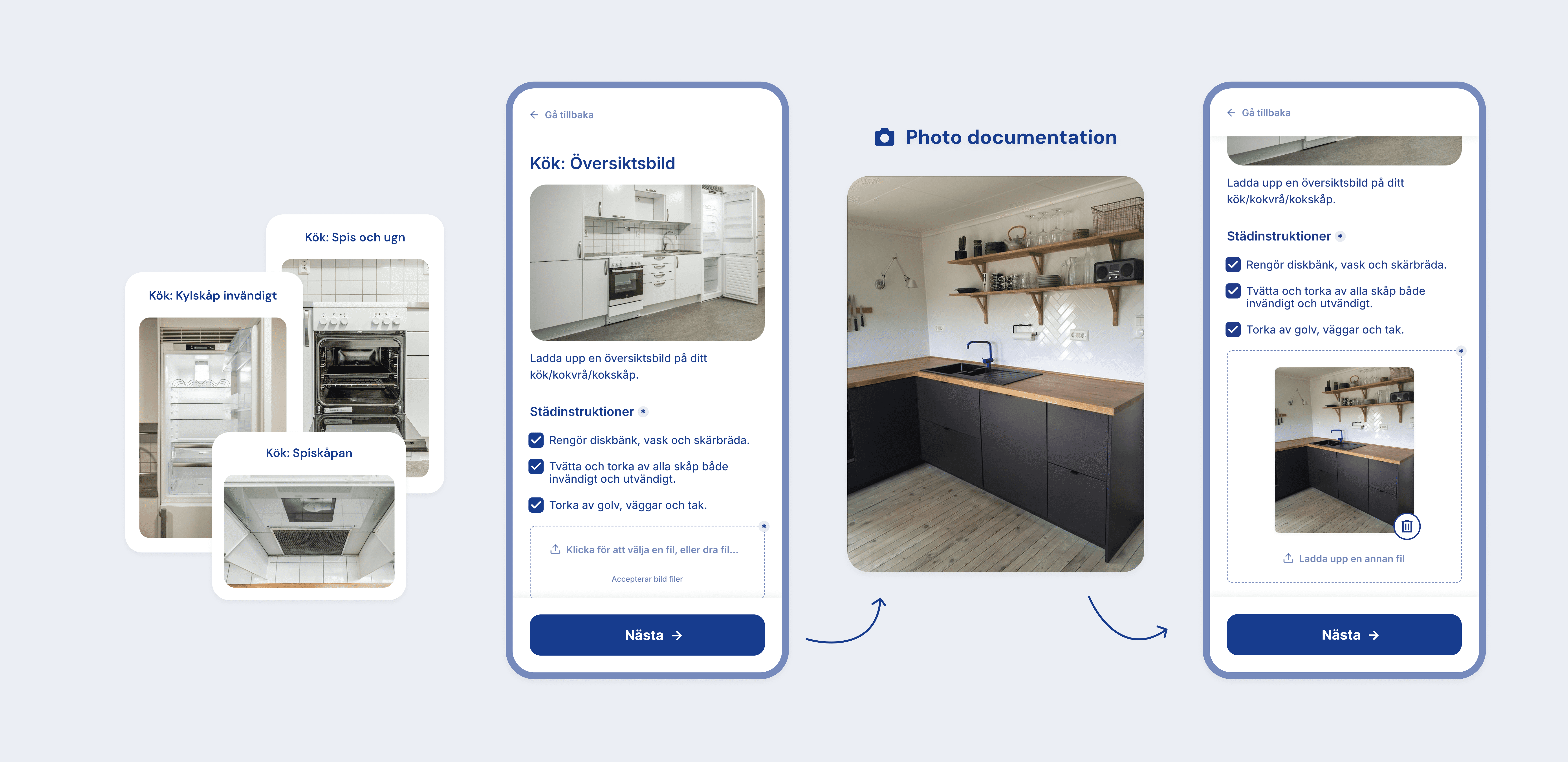
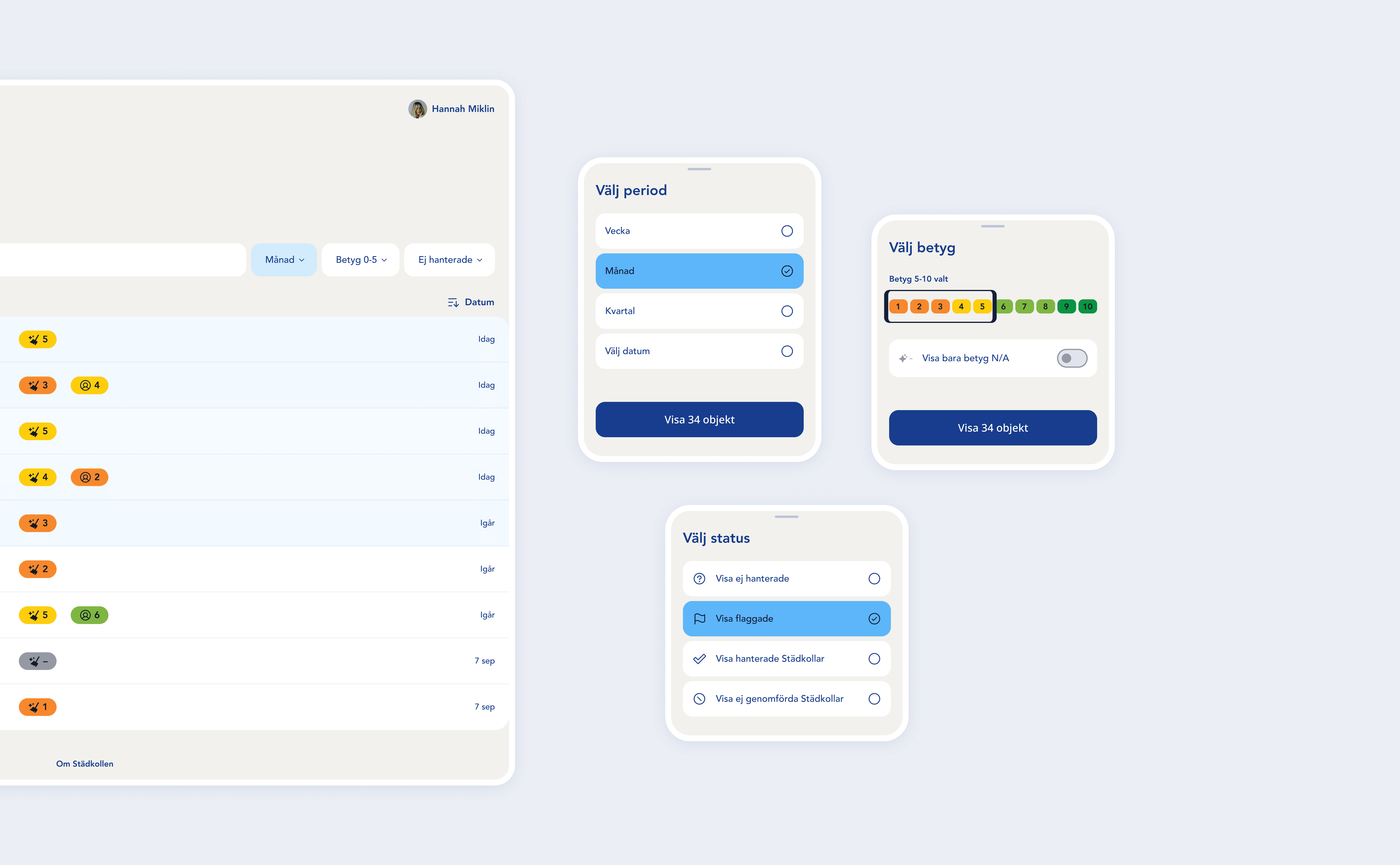
Inspection dashboard
Staff can review submitted cases, identify flagged apartments, and prioritise where physical inspection is needed.

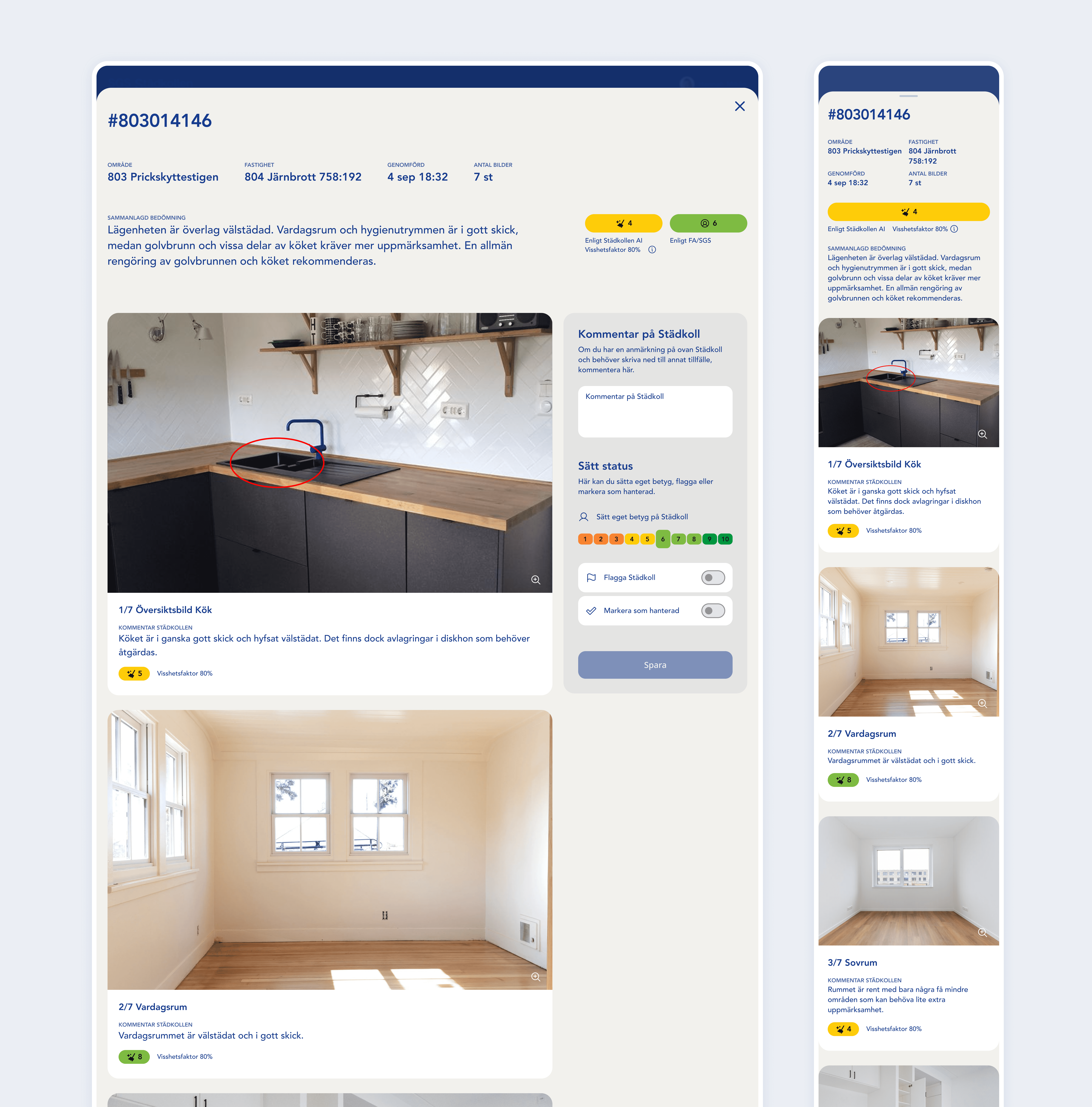
AI-supported evaluation
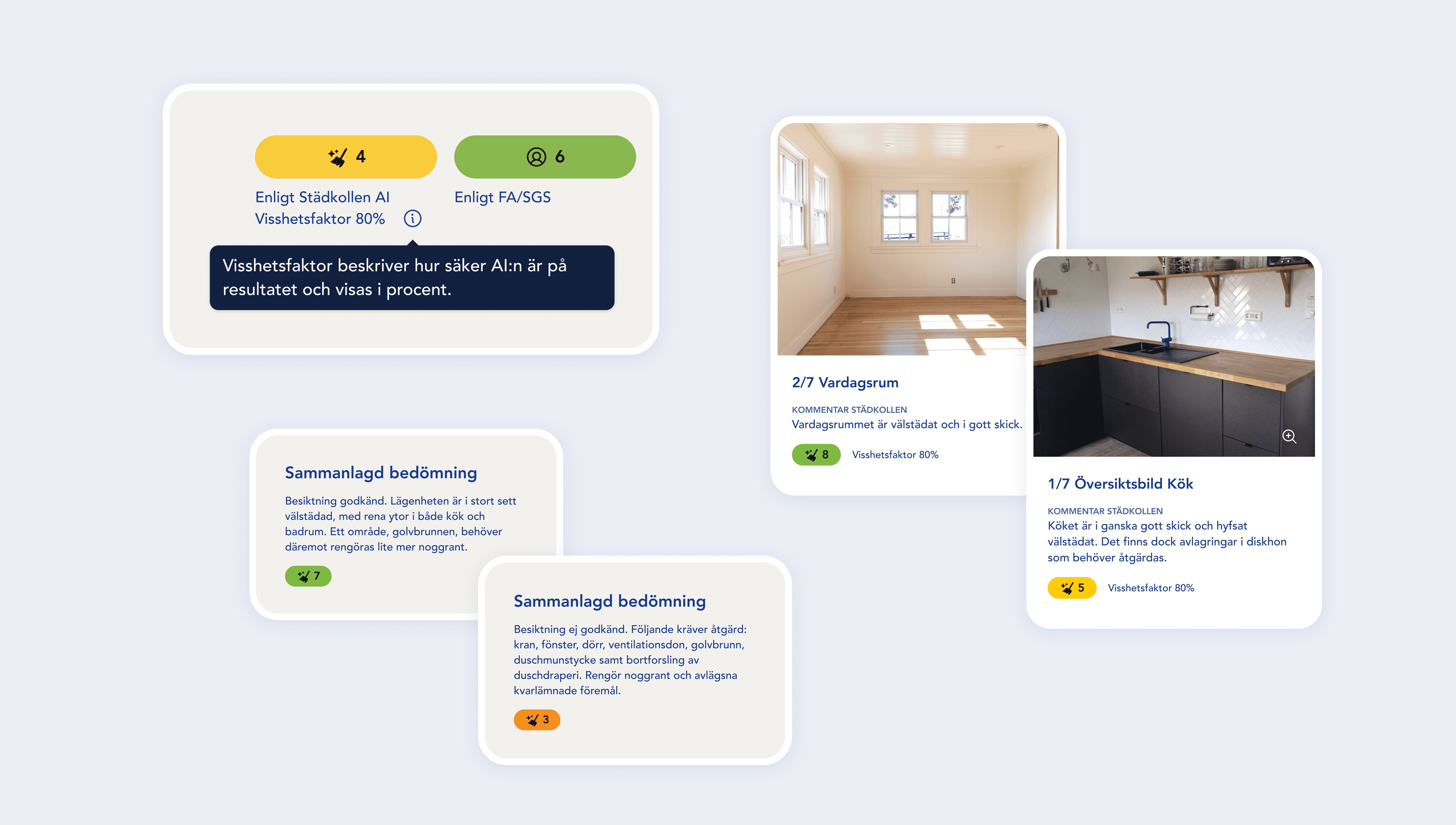
AI-generated scores and feedback support a more standardised assessment while keeping final decisions with staff.
Product in use
Video by Future Memories
Recognition
The product was awarded
“Star of the Year 2025” ⭐ by Nöjd Studbo, recognising its impact on both operational efficiency and tenant experience.
Reflection
What initially appeared to be a cleaning problem turned out to be a trust problem. Students lacked confidence in what was expected, while property managers lacked consistent tools for evaluation. Designing Städkollen became less about inspections and more about creating a shared understanding between stakeholders. The project reinforced the importance of designing operational systems that work across people, technology, and real-world constraints.
Read more about the project
Article, June 12, 2025:
”Våga testa” – prisbelönad AI-lösning banar väg för framtidens kundservice ↗
Article, May 16, 2025:
De är vinnarna av Nöjd Studbo 2025 ↗
Article, October 1, 2024:
AI ska hjälpa studenter med flyttstädning ↗
